








Voices of Experience
While working with newly diagnosed breast cancer patients, I quickly learned the value of their early interaction with other women who had experienced breast cancer. They needed to talk to a peer who had survived all of the decisions that they were going to have to make over the next weeks and months. In the Breast Cancer Treatment Handbook three women from very different situations share their experiences, fears and thoughts on their journeys with breast cancer. Let me introduce you to Anna, Earnestine, Lisa, and Robin.
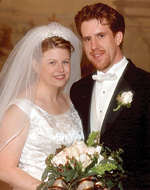
Anna's Story
Anna was 32 years old and single when she noticed a flattened area below her left nipple. She had always performed monthly breast self-exams but had never felt anything unusual in this area. Gradually, she noticed that the area would flatten out more when she raised her arm. Anna mentally dismissed it as hormonal changes or recent weight loss but continued to keep her eye on it. She had other important things on her mind—she was planning her wedding.
The wedding went as planned without any problems. She and her new husband, Brian, went to Jamaica for their honeymoon. During the trip, Anna felt a noticeable lump beneath the flattened area of her breast. When they arrived home, she called her OB/GYN, who performed an ultrasound and immediately decided a mammogram was needed. Anna saw a surgeon and had a fine needle biopsy just seven days after she had been sitting on the beach in Jamaica. Twenty minutes after the biopsy, she was told that it looked positive for cancer. “Brian and I were completely shocked,” Anna told me. “I can’t even remember what the doctor said to us after those words.”
One month after the wedding, Anna underwent seven hours of surgery: a mastectomy with immediate TRAM flap reconstruction. All 16 lymph nodes removed came back negative. Anna had chemotherapy. The day of her first chemo treatment, Brian shaved his head to show his support. “When other couples were starting their new life together, Brian was sitting on the bathroom floor holding me as I threw up.”
Anna recalls the experience: “Cancer changed our lives as individuals and as a couple. I was young—too young for breast cancer, some would think. But I learned from experience that breast cancer does happen to young women. I also learned that having cancer at an early age brings different types of problems to a woman and her spouse. Because of this, I became involved in the Young Survival Coalition, an organization focused on supporting young women with breast cancer. I went on to get my MBA in healthcare administration and work in breast health. I served as President of the Young Survival Coalition during 2010 – 2011. I feel like I am making a difference every day so that no one, in particular a young woman, has to feel alone when she is diagnosed with cancer.”
Anna and Brian’s lives changed quickly. They were a young couple facing a breast cancer diagnosis, but they allowed an unexpected visitor to turn their lives into a mission to help others. I asked Anna to share how a young woman processes and responds to the many decisions that have to be made. Throughout the Breast Cancer Treatment Handbook, you will read Anna’s response to her cancer diagnosis from the perspective of a young survivor.
Brian, Anna's husband, provides commentary in the Breast Cancer Support Partner Handbook.
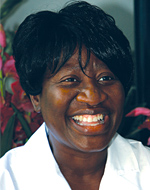
Earnestine's Story
Earnestine was in her late forties in June of 2007 when she was diagnosed with infiltrating ductal carcinoma. She had seen cancer in her extended family, so she says that her diagnosis didn’t come as a complete surprise. Her greatest concern was how it would impact her loved ones. As the head of her household, Earnestine was financially responsible for her three children—Shannon, Krystle, and Amber—and her aging mother. She worked two jobs to keep bills paid, and the thought of stepping back from her responsibilities was daunting.
She didn’t have time for cancer, but once she was diagnosed, she was determined to learn about her treatment options and face the disease head-on because she wanted a cancer-free future. She underwent lumpectomy with lymph node dissection, chemotherapy and radiation therapy. The journey brought physical and emotional challenges, but she remained focused on her family and her future.
Now that cancer treatment is behind her, Earnestine has a new focus on taking care of herself and enjoying her children and grandson. She demonstrates the best of survivorship when she says, “For me, cancer had its ups and downs—but I’m still here.”
Her commentary throughout the book explains how she learned to slow down and take care of her health. During her treatment, she also learned to depend on her family for support.
Her daughter, Krystle, provides commentary in the companion volume to this book, the Breast Cancer Support Partner Handbook.
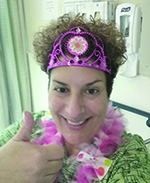
Lisa's Story
Lisa was single, working as a software designer and teaching fitness classes when she was diagnosed with breast cancer. A routine mammogram showed microcalcifications, and a biopsy confirmed she had ductal carcinoma in situ (DCIS).
“I left the surgeon’s office in shock because I had no lump, no symptoms, nothing to suggest I had breast cancer. I had taken good care of myself. Yet my reality was breast cancer. I had to pick myself up and decide what to do. I had no other good choice.”
After the surgeon explained her surgical options, Lisa decided a double mastectomy with immediate implant reconstruction was the best option for her. “You never know what choices you will make until you are forced to make them.” As a single, professional woman, Lisa wanted cancer to be behind her and to eliminate the “what ifs” from her mind. “I wanted a clean slate. It wasn’t easy, but I had choices.”
“Many people face their cancer surgery with fear, apprehension, and tears, but I did not want to be that person. I wanted to approach it with a positive attitude. On surgery day, I walked into the hospital wearing a pink tiara and boa, ready to show my cancer that I was tougher and stronger than it was. People laughed and called me the ‘Cancer Princess.’ No denying it, surgery was physically tough, but I stayed focused on the goal of being cancer-free.”
“Breast cancer was a wake-up call. My work life and my personal life were way out of balance. Seventy-hour workweeks left little time for me. Cancer caused me to make major changes. I’ve reduced my hours at work and now I take time for myself—not in a selfish way, but in a positive one. I am fortunate that breast cancer opened my eyes. Today, I am ALIVE, happy, healthy, and living a wonderful new chapter of my life.”
I asked Lisa to join us as a commentator for Voices of Experience after receiving a heartfelt letter about her cancer journey. I knew she had valuable insight about approaching cancer with a victor’s attitude, rather than a victim’s. She had a unique approach—one grounded in the principles of regaining control and facing the future with an attitude of “I am determined, I will survive.” Her perspective as a professional, single woman serves as an inspiration to other women.
Lisa's sister, Rosemary, offers commentary in the companion volume to this book, the Breast Cancer Support Partner Handbook.
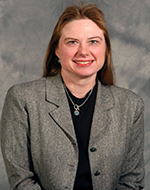
Robin's Story
I first met Robin through a heartfelt letter sharing her journey with breast cancer. Her words revealed a woman who faced her fears head on, sought knowledge, and found creative ways to overcome the challenges of treatment. Robin’s courage, determination, and innovative spirit turned obstacles into opportunities for strength. I invited her to share her story with you, hoping it will inspire and encourage you as you navigate your own path.
Robin’s words to you, “I’m writing in the hope that sharing my first two years with breast cancer may help you. Each of our journeys is unique, but we share common fears, hopes, and questions. I hope something here brings you comfort or clarity.
In June 2023, I was shocked to hear, ‘You have cancer.’ I was diagnosed with invasive lobular breast cancer—a total surprise. At 58, I was a professor and physician in psychiatry, radiology, and behavioral medicine, far removed from oncology. I lived a healthy lifestyle and thought I was immune. My mind jumped to outdated medical school statistics from 34 years ago, and I feared the worst.
At my appointment, the nurse navigator handed me this book and encouraged me to read it. I did—many times. It explained not only the medical steps ahead, but also the emotional weight of uncertainty. As a physician, I was used to turning to PubMed for answers, but it only fueled my fears. This book became my anchor for facts, reassurance, and hope.
Knowing what to expect made each step—MRIs, ultrasounds, SLN injection, and Savi Scout—less frightening. These were routine, not signs of doom. My greatest fear wasn’t surgery or treatment—it was dying before I was ready. I feared bad news at every turn, especially when abnormalities were found in the other breast just before surgery.
I chose a lumpectomy and radiation while waiting for genetic testing. After a few delays, my results showed I didn’t need chemotherapy. I began letrozole and Zometa® for bone protection. A year later, abnormal mammograms led to more biopsies. Thankfully, they were benign. Now, two years in, both my mammogram and surgeon’s report are good.
I’m still here—and grateful. I no longer wait for retirement to live my life. I want to offer you hope. I’ll be honest: the ‘what ifs’ still come, especially before follow-ups. But I’ve learned to manage that fear and let relief wash over me when good news arrives.
In this book, I’ll share what helped most—both from my experience and from others. Aside from the love of my incredible husband, this book was the best ‘treatment’ for my soul.
Lean on your people. Share your fears. Ask questions. And above all, know this: you are not alone.”
As Survivors, we learn that survivorship is an attitude we adopt. It is the one component of recovery that no one else can do for us. We have to decide for ourselves how we intend to respond to our illness and how we will approach our recovery. We, alone, decide to become Survivors.
EduCare President